
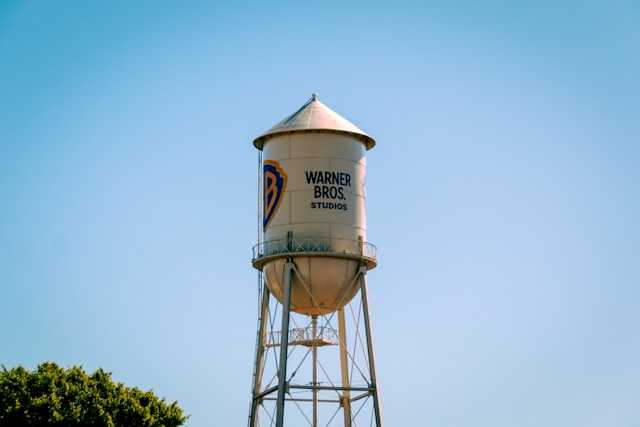

Warner Bros. Discovery’s planned separation into two companies, a streaming and studio-focused entity and a legacy television and cable business, signals a broader shift in how entertainment conglomerates are restructuring to attract investors and compete in the streaming era. This article explains how media spin-offs work, what legal considerations apply, and what the Warner Bros. Discovery deal means for the future of mergers, acquisitions, and restructuring in the entertainment industry.
What Is a Corporate Spin-Off in Media?
A corporate spin-off occurs when a parent company separates part of its business into a new, independent entity, often distributing shares of the new company to existing shareholders. In the media industry, spin-offs are commonly used to separate high-growth segments (such as streaming or studios) from slower-growth or debt-heavy divisions (such as cable networks), allowing each business to operate with greater strategic and financial focus.
How Do Media Mergers and Spin-Offs Work Legally?
Media mergers and spin-offs involve a series of structured legal steps, typically including board approval, regulatory disclosures, and compliance with federal securities laws. Companies must prepare detailed filings with the U.S. Securities and Exchange Commission (SEC), including Form 10 registrations or proxy statements outlining the transaction.
The process generally includes:
- Allocating assets, liabilities, and intellectual property between the resulting entities
- Establishing independent governance structures and executive leadership teams
- Addressing contractual obligations, including licensing, distribution, and labor agreements
- Ensuring compliance with antitrust and competition laws, even where no new merger occurs
These transactions are often designed to qualify as tax-free reorganizations under Section 355 of the Internal Revenue Code, provided specific statutory and business-purpose requirements are satisfied.
What Are the Tax Implications of a Media Spin-Off?
When structured properly, a corporate spin-off may be tax-free to both the parent company and its shareholders under Section 355. To qualify, the transaction must meet strict requirements, including demonstrating a valid business purpose and ensuring that both resulting entities continue active trade or business operations.
Failure to meet these criteria can result in significant tax liability, making advance planning and IRS compliance critical. Companies often seek private letter rulings or rely on established precedent to mitigate risk.
Transaction Overview
Warner Bros. Discovery announced plans to separate into two independent publicly traded companies by mid-2026, effectively reversing one of the largest entertainment mergers in recent years.
Under the proposed structure:
- Warner Bros. will include Warner Bros. Pictures, Warner Bros. Television, DC Studios, HBO, Max, and Warner Bros. Games
- Discovery Global will include cable and linear networks such as CNN, Discovery Channel, TNT Sports, and the Discovery+ platform
Chief Executive Officer David Zaslav will lead Warner Bros., while Chief Financial Officer Gunnar Weidenfeld is expected to serve as CEO of Discovery Global.
The separation follows the 2022 merger between Discovery and WarnerMedia (formerly owned by AT&T), a $43 billion transaction that left the combined entity with approximately $37 billion in debt.
As reported in investor communications and industry coverage from outlets like Variety and The Hollywood Reporter, a substantial portion of that debt is expected to be allocated to Discovery Global, while Warner Bros. will retain a more growth-oriented balance sheet. The company has also arranged a $17.5 billion short-term loan to repurchase outstanding debt and stabilize credit positioning during the transition.
Legal and Strategic Considerations
From a corporate governance perspective, the separation reflects a broader industry trend toward simplification and targeted market positioning. By dividing its business units, Warner Bros. Discovery aims to eliminate cross-subsidization between fundamentally different revenue models.
Legally, the transaction unwinds key elements of the 2022 merger, which was initially structured to achieve scale efficiencies in competition with major streaming platforms. However, market response suggests that scale alone is insufficient without sustained profitability and disciplined content investment.
Although the transaction does not involve a new merger, it may still raise antitrust considerations, particularly if either entity becomes the subject of future acquisition activity. Structurally, isolating debt within Discovery Global may position Warner Bros. as a more attractive acquisition target.
Comparable restructuring strategies have emerged across the industry, including Comcast’s 2024 creation of a standalone linear television entity.
Intellectual Property and Studio Operation Implications
The separation will consolidate Warner Bros.’ core intellectual property, including the DC Comics universe, the Harry Potter franchise, and its extensive film and television library, within a single corporate entity.
From a legal standpoint, this concentration of IP simplifies ownership structures but may trigger review of:
- Licensing and distribution agreements
- Assignment clauses in existing contracts
- Financing arrangements tied to content production
- Collective bargaining agreements with unions and guilds
Any future merger or acquisition involving Warner Bros. would likely require renegotiation or consent under these agreements, making IP diligence a critical component of deal planning.
Industry Context
Warner Bros. Discovery’s restructuring aligns with a broader industry shift away from aggressive consolidation and toward sustainable profitability. Media companies are increasingly separating high-growth streaming and production assets from slower-growth legacy operations.
These transactions are typically structured as tax-efficient spin-offs under Section 355, subject to oversight by the Internal Revenue Service and disclosure requirements enforced by the SEC.
The company is expected to provide further details in upcoming filings, including its Form 10-K or a dedicated proxy statement outlining the terms of the separation.
Once complete, Warner Bros. and Discovery Global will operate as independent public companies, allowing investors to evaluate each business based on its individual financial performance and growth trajectory.
Speak with an Entertainment & Business Attorney Today
If your company is considering a merger, acquisition, or corporate restructuring, particularly in the entertainment, media, or technology sectors, the legal and financial implications can be significant. At Romano Law, our attorneys advise clients on complex transactions, intellectual property strategy, and corporate governance to help protect value and minimize risk. Contact us today to discuss how we can support your business through every stage of growth and transition.
Contribution to this blog by Kennedy McKinney.